

Archaeology
The cultivation of vines and the production of wine in Antiquity have left a deep imprint in the archaeological record, from Vitis pollen signals, grape seeds and traces in the soil of cultivation pits and trenches, over pruning and harvesting knives, winemaking structures and tools, to earthenware vessels and wooden barrels for fermentation and storage. An additional rich dataset are amphorae, which allow to trace and investigate the trade and commercialization of wine.
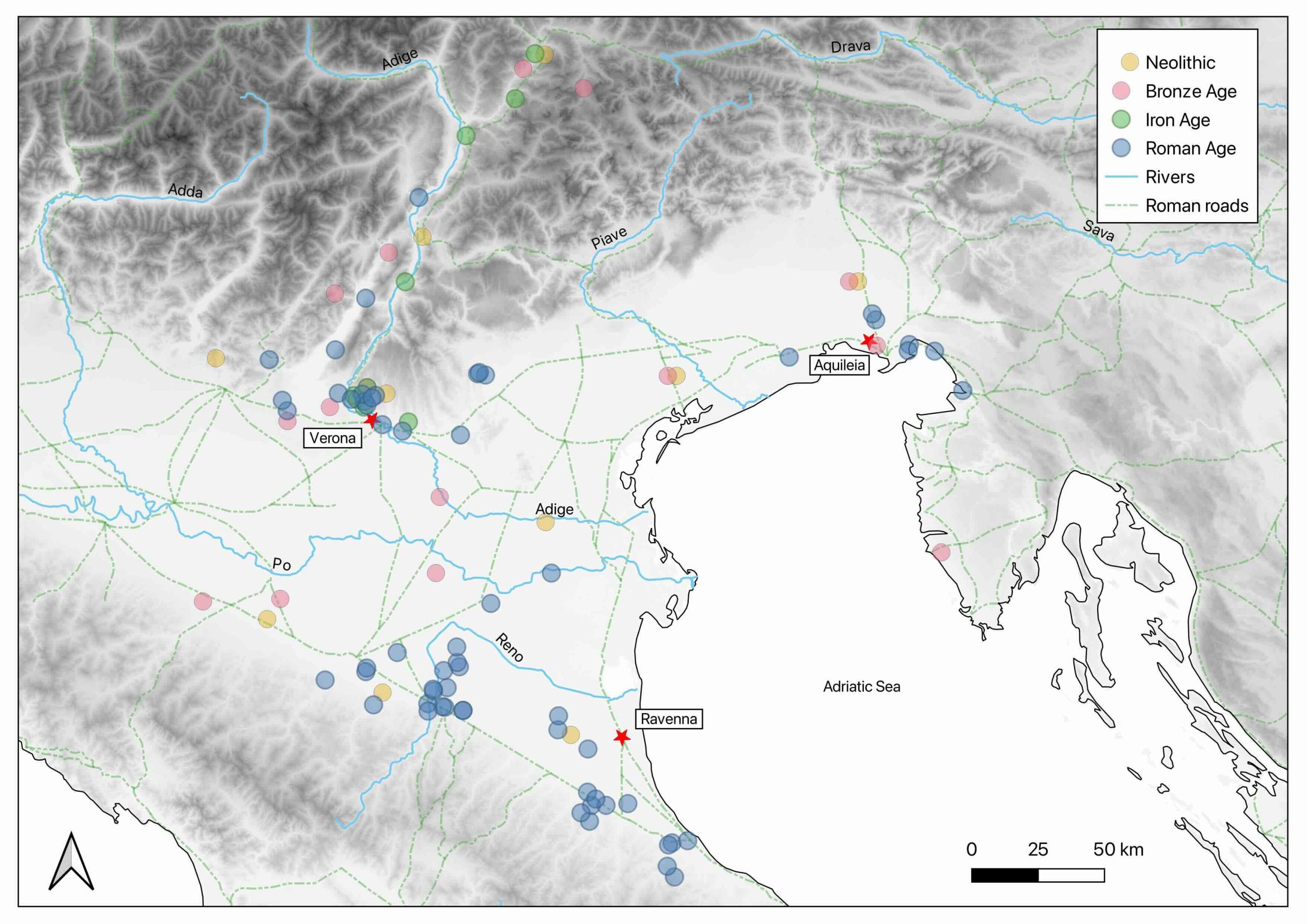
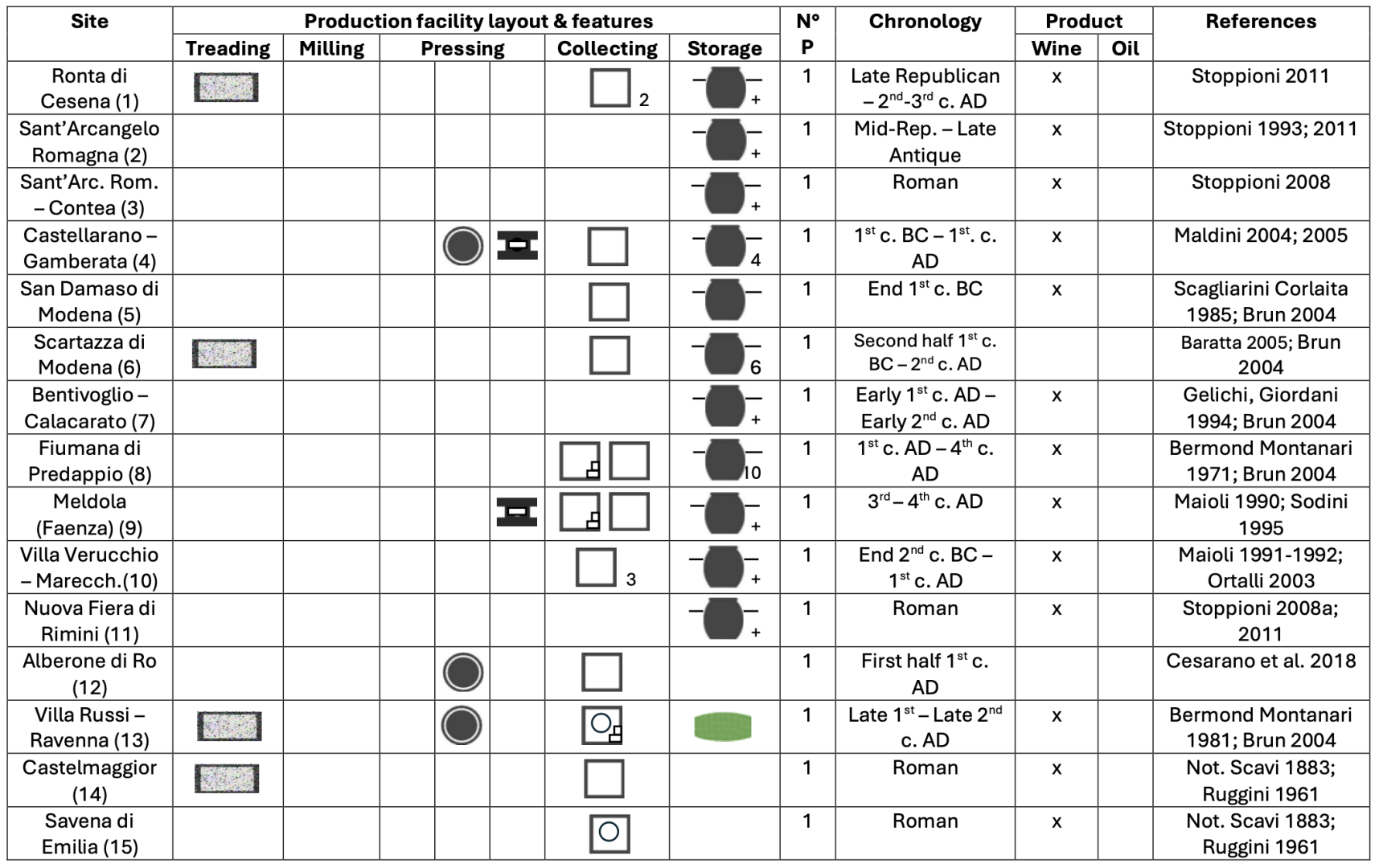
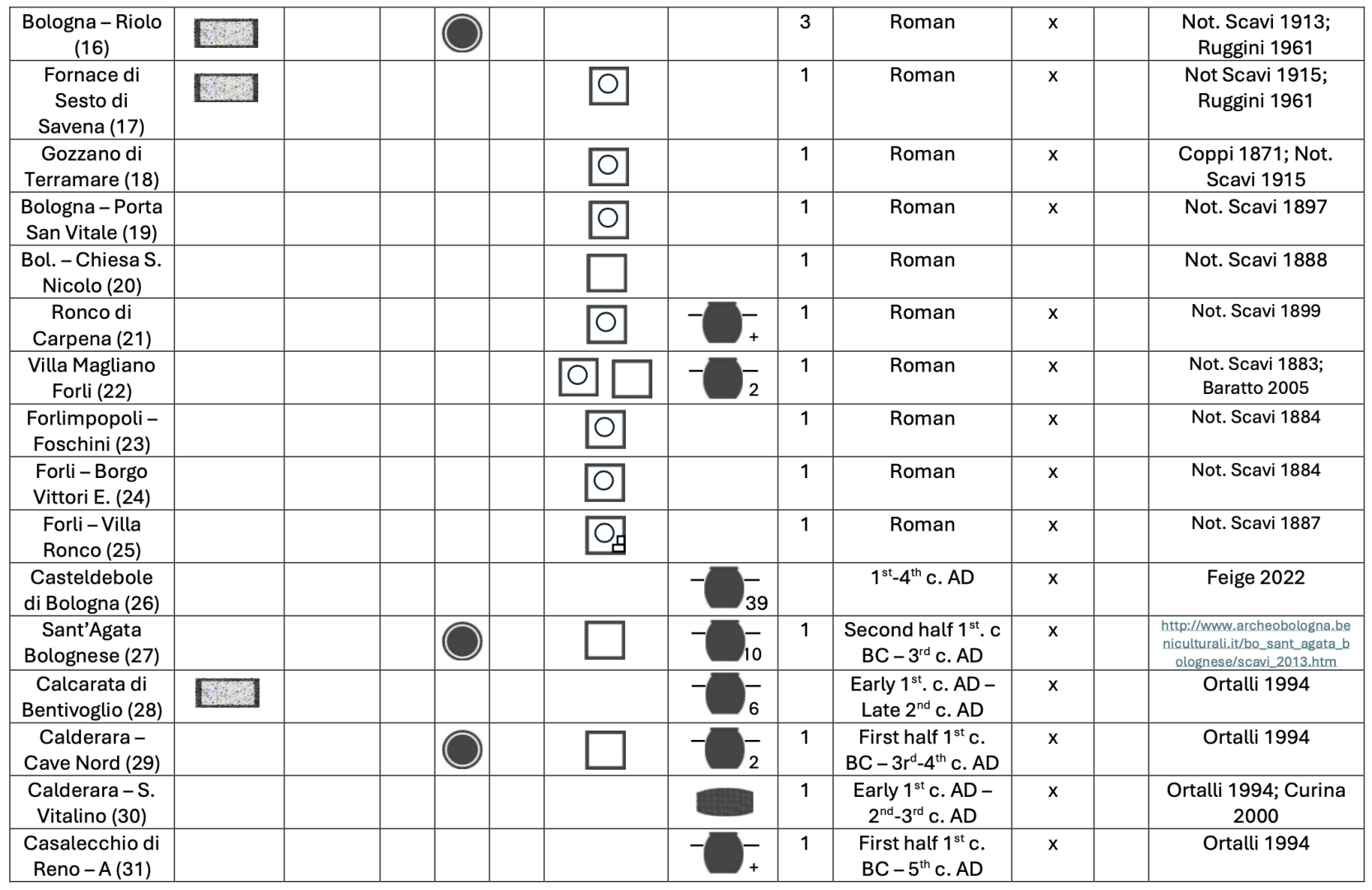
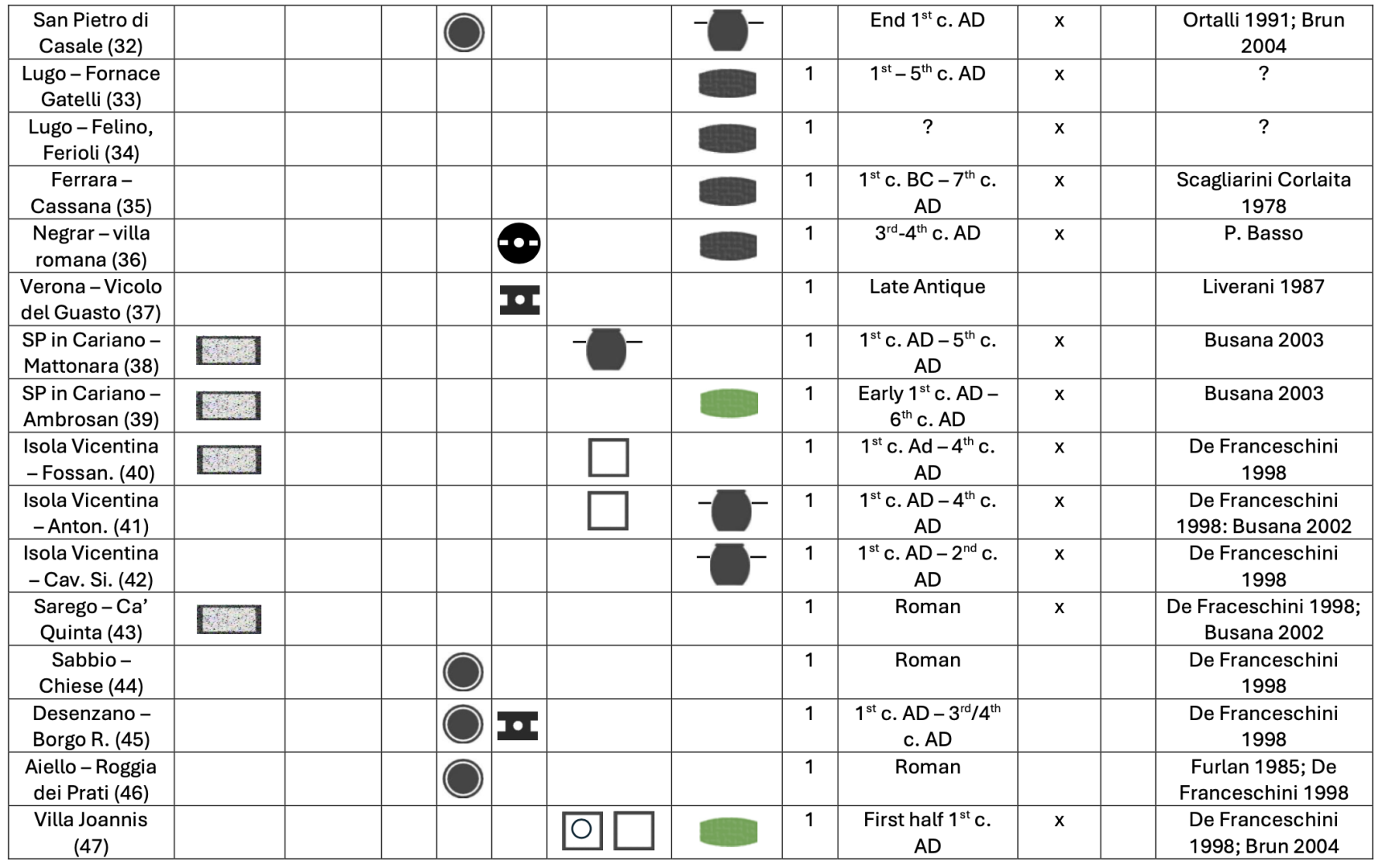
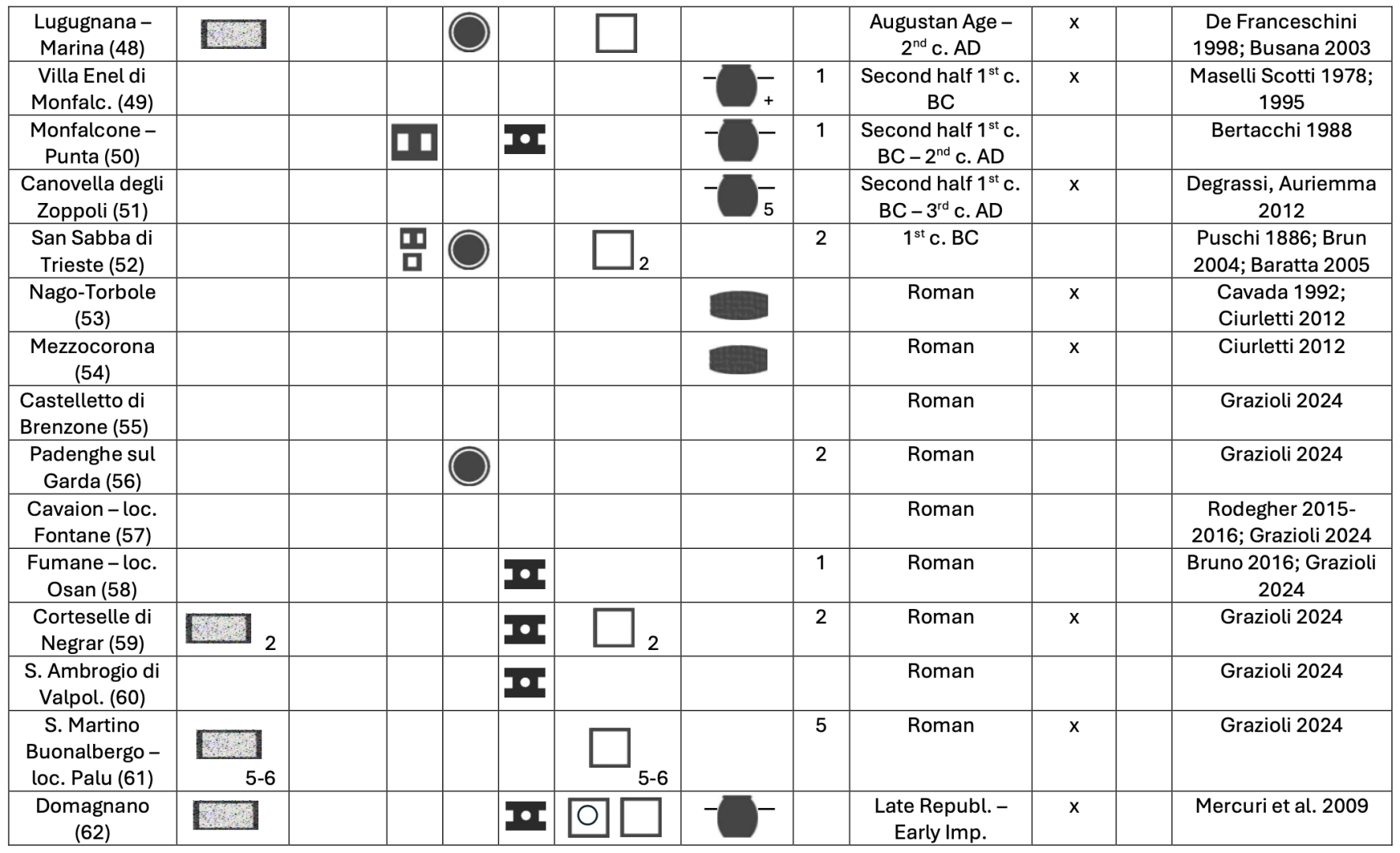
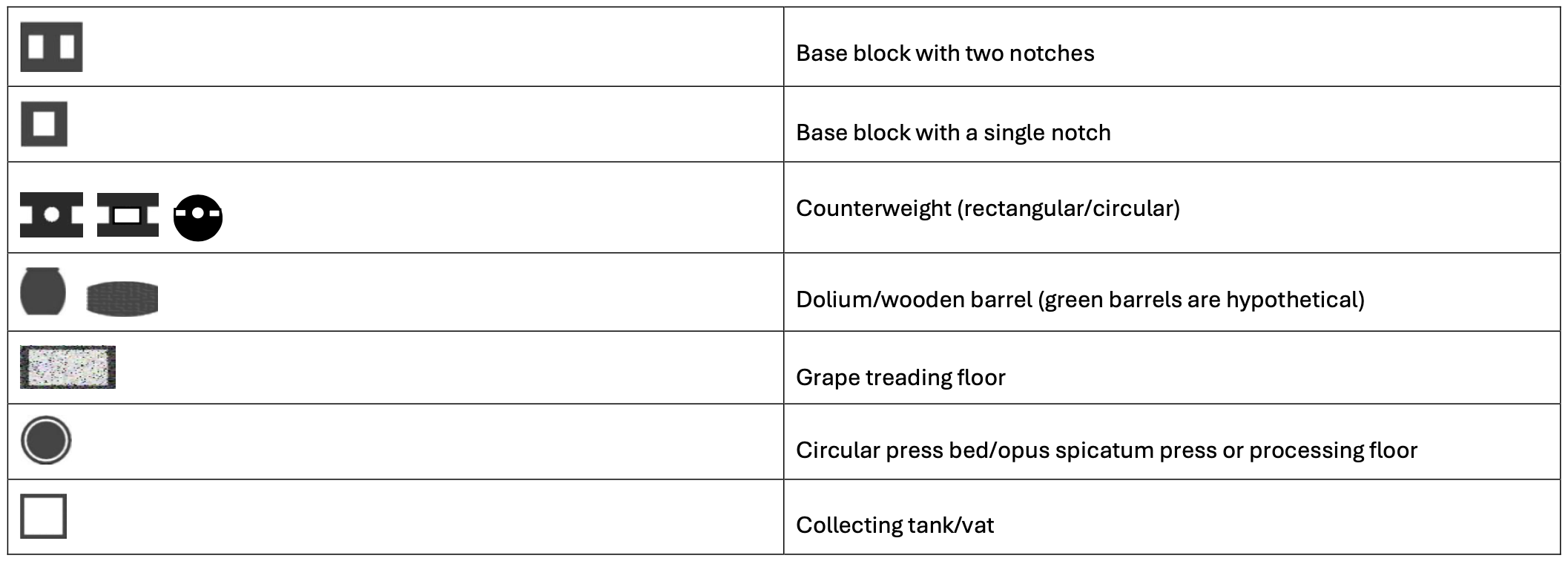
Within the framework of the ArchaeoAdWine project, for the Roman and late antique period, 62 sites with archaeological evidence for vine-growing and winemaking were inventoried and analysed in the northern Adriatic. The aim was to acquire deeper insight into the materiality of regional viniculture, and to evaluate the kinds of structures and processes that characterized winemaking in this part of Roman Italy.
This first-time total investigation of the archaeological signals of viticulture practices in the northern Adriatic has revealed a vibrant wine scene – especially in the Adige River Valley, in Valpolicella, around Aquileia and along the Via Aemilia – with distinct material features, including the likely massive use of wood in press building, and the combination of dolia and barrels for storage and vinification, depending also on climatic data. Especially in the lower valleys and the wide Po plain until the coast, these facilities were operating within a vine-growing landscape often defined by the use of host trees for tending and training vines within mixed agricultural fields